Showing posts with label recipes. Show all posts

Tuesday, April 2, 2013

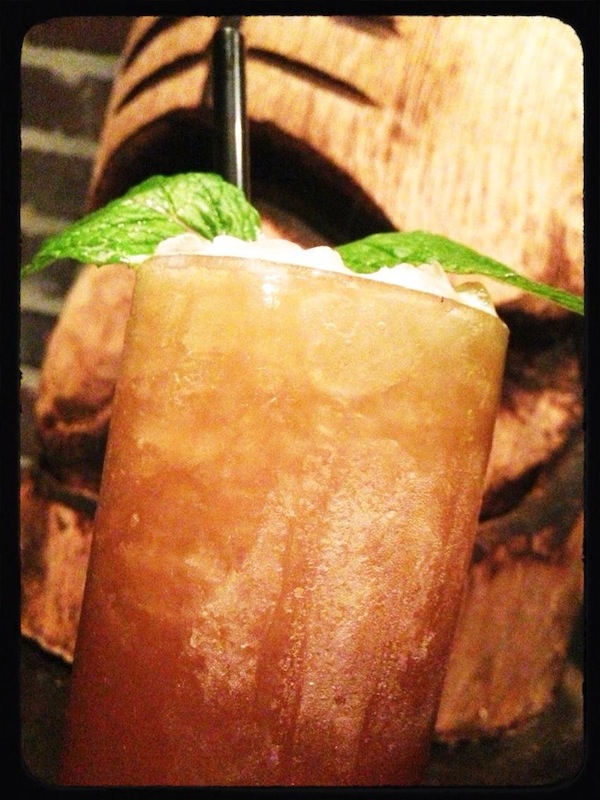
Zombie

These are probably not the first words that come to mind when someone uses the word “zombie” these days. Most people probably begin to talk about their favorite scenes from John Romero or that TV show on AMC.

Find a good bartender though, and ask them about a Zombie. That twinkle you see in their eyes (or is that dread?) is a brain cycling through a list of ingredients a mile long, and a cocktail history that can match it.

Ernest Raymond Beaumont Gantt was born in Texas in 1907. It seems like an unlikely name and birthplace for the person largely held as being responsible for the Polynesian pop-culture phenomenon known as “Tiki” - but that’s probably why he eventually changed his name to Donn Beach better known as Don The Beachcomber.

Gantt travelled the world as something of a vagabond - visiting places in the South Pacific and the Caribbean specifically - before finding himself in Los Angeles in the early 1930’s. It was there that he took over a small shop and turned it into a bar: Don’s Beachcomber Cafe.

The future Don had very little money, but he had picked up a thing or two about rum punches while in Jamaica, and rum happened to be dirt cheap at the time. So combining his incredible charm, cheap but exotic rum, and the base of Jamaican Planter’s punch, he began building an empire drink by drink. Of his most famous creations, the Zombie may rule the roost.

In 1934 Don unleashed a mixture of four full ounces of rum including a full ounce of overproof rum - on the world. The drink was potent already - but, using his knack for flair, Don made it even more mysterious and alluring by declaring right on the menu that no customer was allowed to have more than two zombies because it was just so strong.

Zombie (1934)
1 ½ oz Jamaican Rum
1 ½ oz Gold Puerto Rican Rum
1 oz 151 Demerara Rum
¾ oz Lime Juice
½ oz Falernum
½ oz Don’s Mix*
1 tsp Grenadine
 
1 dash Angostura Bitters
1 dash Absinthe

Blend with ¾ cup of crushed ice for 5 seconds. Pour into a chimney glass and top with crushed ice. Garnish with fresh mint. 


There’s even a story - almost certainly too amazing to be true - that Don once had a run in with the mob over the Zombie. As the story goes, two mobsters wandered into Don’s one night and had two zombies a piece. When one of them tried to order a third, Don refused, and things got a bit heated. To cool things off, Don suggested that the mobsters come back the next night and if they could drink three zombies, he’d give them his bar.

The mobsters returned the next night, Don made them each their first zombie, then their second, and then their third. Before getting even halfway through their third round of drinks, both men collapsed on the bar - leaving Don victorious.

Per the legend, Don had won rather nefariously. Rather than making the drink according to his regular recipe, Don had added glycerine to the mixture - a move that was guaranteed to ensure that the drinks acted much faster on the mobsters than they normally would have.

Over time, many of Don’s recipes - even recipes for INGREDIENTS in his drinks - were lost. It took dedicated historians and drinkers to bring them back. Most of all, we have Jeff “Beachbum” Berry to thank for bringing the modern world not just the Zombie (for which he found numerous recipes), but the original, 1934 Zombie punch recipe (you should really get a copy of Jeff’s book, Sippin’ Safari to get not only the recipes, but the stories behind finding them).

Thanks to Jeff’s hard work, at 320 Main, we can serve you Zombies that we feel honor Don’s hard work and absolute boozy genius. Of course, we lack the blender that the recipe calls for, so we make do by shaking with crushed ice until our arms scream for mercy and our hands freeze to the tins - sacrifices well worth the smiles of the Tiki gods.

*Don’s Mix is a mixture of grapefruit juice and cinnamon syrup. You can make your own, or you can do what we do and order it from B.G. Reynolds’ Syrups and have it at the ready for all of your Tiki needs!


----
Matt “RumDood” Robold is a bartender at 320 Main and, in his spare time runs RumDood.com, where he writes about rum, rum cocktails, and rum history.


Monday, November 26, 2012

Bridget 75


In 1898 the French army adopted a new field gun (we’d probably just call it a canon) that is widely considered to be the first modern artillery piece. The Materiel de 75mm Mle 1897, which saw extensive use in World War I by the Allied Forces, was commonly referred to as the “French 75” by English speakers. On October 23, 1917, the first artillery shells fired by the US Army in World War I were fired by a French 75 that the soldiers had named “Bridget.”

What does this have to do with drinking?

In 1915 a Scottish barman named Harry MacElhone was running The New York Bar (later called Harry’s New York Bar) in Paris. It was there that MacElhone named a new cocktail consisting of gin, lemon juice, sugar, and champagne on his menu the French 75.

Bridget 75
¾ oz Bonded Applejack
¾ oz Gin
¾ oz Lemon Juice
¾ oz Simple Syrup
1 oz Champagne


Combine all but champagne in a cocktail shaker and shake with ice. Strain into a chilled coupe and top with champagne.

As Fall has eventually found its way to Sunny Southern California, 320 Main decided to take the drink that took Paris and, eventually, New York and other points West by storm, and give it a bit of an American twist and Fall flavor. A little bit of apple goes a long way to making this refreshing drink feel at home among cooler temperatures and red and orange leaves.

Notes:
● It is often debated whether the French 75 originally called for gin or - as many people know it - with Cognac. While there are some notable references to the drink being made with cognac, the earliest references all seem to point to gin as the original base-spirit.
● Noted cocktail historian (yes, that’s an actual job that your guidance counselor hid from you) David Wondrich has pointed out that the combination of gin, citrus, sugar, and champagne can actually be traced back as far as 1867, when Charles Dickens encountered it during his travels to America (though Dickens specifically mentions Old Tom gin, which would have had a different flavor).


----
Matt “RumDood” Robold is a bartender at 320 Main and, in his spare time, runs RumDood.com, where he writes about rum, rum cocktails, and rum history.


Friday, October 26, 2012

Jason Schiffer Original: The Detroiter


“Do I want a beer or a cocktail?”

This is a question I hear a lot when people sit down at the bar. It's an age-old debate among people who want a refreshing drink. Do you want the sour or bitter notes of a cocktail or perhaps the hoppy refreshment of an ice cold beer. Sometimes though, you don't have to make a decision between the two.

People familiar with 320 Main's cocktail list will likely already be acquainted with the Michigander, Jason's Applejack sour with a dose of Cynar Amaro and honey syrup. It's sour, bitter, sweet, and strong – everything you could want in a cocktail.

What customers might not know is that no drink ever remains unchanged for long. Every drink is merely a gateway – a starting point for creating a new drink. You would be hard-pressed to find a cocktail that no bartender had ever looked at and thought, “I wonder what would happen if I tweaked it just so.”

One day, Jason decided that he wanted to perform such an exercise, and chose as his inspiration the idea of beer cocktails. Beer cocktails are not terribly new, you can find them in a lot of bars with a large beer presence. Jason recognized the potential of enhancing the already popular Michigander with the qualities of a good beer and the Detroiter was born.


Detroiter
3/4 oz. Bonded Apple Brandy
1 oz Cynar
3/4 oz. Lemon
3/4 oz. Honey Syrup
2 oz Stone IPA


Add all ingredients to the shaker and shake hard without ice to flatten the beer. Add ice and shake again for about 10 seconds. Strain over fresh ice in an Old Fashioned Glass and top with fresh IPA. Garnish with a grapefruit twist.

The deep, rich and sour flavors of the Michigander pair beautifully with the astringent and herbal notes of the IPA. Apple, hops, honey, and a bit of a smokiness all come through and leave you thinking of the leaves of autumn and warm fire places on cold days.

----
Matt “RumDood” Robold is a bartender at 320 Main and, in his spare time, runs RumDood.com, where he writes about rum, rum cocktails, and rum history.

Monday, September 10, 2012

Three Dots & A Dash


As World War II drew to a close, folks back home in the USA were ecstatic. Evil had been vanquished and their boys (and girls) were coming home. 

This excitement wasn't lost on people like Don The Beachcomber. Don had actually served in the US Army during the war. The War Department, aware of his success running one of the most famous chains of restaurants and bars in the world, put him to work setting up and managing rest and relaxation centers for GI's at the front. Don even received two medals – the Purple Heart and the Bronze star for his work in aiding fatigued combat units in Europe.

Upon the war's end, Don returned home and immediately decided to commemorate the allied victory in the war in the a way only he could – with a drink.

Three Dots & A Dash a la 320 Main
1 1/2 oz Amber Martinician Rum
1/2 oz Demerara Rum
1/2 oz Lime Juice
1/2 oz Orange Juice
1/2 oz Honey Mix
1/4 oz Pimento Dram
1/4 oz Falernum
1 dash Angostura Bitters
5 oz Crushed Ice
1/2 oz Water


Combine all in a mixing tin and shake vigorously until the tin is ice-cold. Pour into a chimney glass and top with fresh crushed ice. Garnish with three cherries and a pineapple spear.

The garnish is the thing with this drink. The three cherries and the pineapple spear represent the three dots and the dash of the name of this drink – which also happens to be the code for the letter “V” in Morse Code and was used to signify “VICTORY!”

Don's original recipe calls for the use of a blender to make this drink. We don't have blenders at 320 Main, so we've cut back on the crushed ice a tad and added some water to give the drink its proper dilution without requiring your bartender to shake your drink for over a minute.

This is especially important for Tuesdays.

Why are Tuesdays so special? Because 320 Main is going tropical every week with Tiki Tuesdays! 


Every Tuesday night you can enjoy a selection of tropical libations from our bartenders for only $8, including the Three Dots & A Dash, Planter's Punch, and Navy Grog.

So be sure to come on in and lose yourself in the tropical paradise of 320 Main every Tuesday night, starting September 25th!


----
Matt “RumDood” Robold is a bartender at 320 Main and, in his spare time, runs RumDood.com, where he writes about rum, rum cocktails, and rum history.

Friday, June 15, 2012

The Gimlet


The Gimlet is a drink well-known and yet still somewhat forgotten. It’s a simple mix of gin and lime cordial - calling specifically for Rose’s Lime Juice - at equal parts of each. Beyond being codified in books like the Savoy Cocktail Book, the recipe was forever-etched into the memories of a generation when the character of Philip Marlowe in Raymond Chandler’s The Long Goodbye said, “A real gimlet is half gin and half Rose's Lime Juice and nothing else. It beats martinis hollow.”


Today you’ll find most home bars stocked with what is likely a very old bottle of Rose’s Lime Juice, but in most cocktail bars that focus on Craft Cocktails, the Rose’s is conspicuously absent. This is because over the years, the formula for Rose’s has changed and it has steadily moved from being the lime cordial of choice for cocktails to, as Paul Clarke of Imbibe Magazine once said, an “anathema to the concept of a quality cocktail.”


This sea-change from fifty-plus years ago has meant that the Gimlet has fallen out of favor in the craft bars. But the Gimlet, at its core, is a seductive and delicious drink. It’s very close to being a gin sour with lime, but Rose’s Lime is a cordial or syrup, not actual lime juice, and that makes a big difference in the drink.


Refusing to associate the Gimlet is something akin to throwing the baby out with the bathwater. A number of bartenders have taken to adding a little fresh lime juice to brighten the drink a bit. Still others - especially bars with kitchens (like, oh, 320 Main) - have taken to making their own lime cordials.


Gimlet
2 oz Plymouth Gin
1 oz Housemade Lime Cordial
¼ oz Lime Juice


Combine in a shaker and shake with ice. Strain into a chilled cocktail glass. At 320 Main, we’ve added Lime Cordial to our list of house-made syrups and tinctures - effectively creating our own take on Rose’s Lime Juice. We combine limes, ginger, sugar, and spices to create a bright and tart concoction that’s incredibly easy to quaff.

----
Matt “RumDood” Robold is a bartender at 320 Main and, in his spare runs RumDood.com, where he writes about rum, rum cocktails, and rum history.

Monday, April 30, 2012

The Mai Tai


320 Main's Mai Tai

When one thinks of Tiki, they think of sailing around the South Pacific, sipping drinks out of pineapples or coconuts, and lounging around white, sandy beaches whilst the breeze gently presses its way through the palms overhead. Here at 320 Main we may not have the coconuts and pineapples, but we still have the beach and, more importantly, we have the Mai Tai – the King of Tiki Drinks.

The Mai Tai was created in 1944 by Victor Bergeron – better known as Trader Vic (yes, that Trader Vic). By that time, Trader Vic's had locations in Oakland and Seattle, modeled after successful Polynesian Palaces like Don The Beachcomber's.

Vic Bergeron a.k.a Trader Vic
To create the Mai Tai, Vic combined Jamaican rum, curaçao, lime juice, rock candy syrup, and orgeat – an almond syrup created in France. The drink – full of flavors funky, tart, and just enough sweetness – proved so delicious and became so popular that Vic's restaurants eventually depleted the entire world supply of the Wray & Nephew 17 Year Old rum (you can occasionally find bottles in private collections for as little as $56,000 today). Vic was forced to try to recreate the rum's distinctive flavor by combining other Jamaican rum with rum from Martinique.

Mai Tai
.75 oz Appleton Estate Reserve Rum
.75 oz Rhum Clément VSOP
.75 oz House-Made Mai Tai Mix*
.75 oz Lime Juice
* Clément Creole Shrubb, house-made orgeat, and rich simple syrup

Shake with crushed ice and pour into an Old Fashioned glass. Garnish with a lime shell and fresh mint.

320 Main may not be the beating heart of Faux Polynesian Faire, but we can't help but tip our straw hats to Trader Vic and what may be his greatest creation and an experience that is sure to make you proclaim, “Mai tai roa ae!”*

*”Out of this world – the best!” in Tahitian


----
Matt “RumDood” Robold is a bartender at 320 Main and, in his spare time, runs RumDood.com, where he writes about rum, rum cocktails, and rum history.


Tuesday, November 15, 2011

Laird's Apple Brandy: A Truly American Spirit

Laird’s Bonded Apple Brandy and AppleJack are quite possibly my favorite spirits.


AppleJack was the first commercially distilled spirit in America and the Laird family established America’s first commercial distillery in Scobeyville, New Jersey in 1780. Scotsman Alexander Laird emigrated in 1698 and began producing AppleJack for his family’s use. Fast forward to 1760 when descendant Robert Laird served in the Revolutionary War under George Washington and the Laird family supplied the troops with Applejack. Mr. Washington himself was a fan, requesting the recipe and referring to the "cyder spirits" in his diary. 

The name AppleJack supposedly refers to the term Jacking, meaning creating a spirit from freeze distillation. This method involves freezing a fermented product (i.e. apple cider) and scraping the softer, high alcohol contents away from the frozen water. This method declined because the byproducts of fermentation (methanol, ethanol, etc.) cannot be separated and it was therefore inferior to evaporative distillation. Today’s AppleJack is made from naturally fermented apples which are distilled and aged for 4 to 8 years. This Apple Brandy is then blended with 65% neutral spirits to create AppleJack. Lairds also produces Bonded Apple Brandy, a 100 proof spirit made from 100% apple brandy aged 6 to 10 years.


The unique flavor of AppleJack is reason enough to stock your bar with it and it is also essential for classics such as the Jack Rose. But aside from these two reasons, I personally feel a sense of pride in being able to go through our country's history and collect things that are uniquely American such as this classic spirit. We are a young country and there are so few things that you can trace back to the beginning of America. It’s kind of my way of discovering who I am as an American - a way of reminding myself what it is to be American. We are entrepreneurs, inventors, builders and makers of things. It’s what we do. It’s who we are. That is why I love AppleJack. It is American through and through. Before there was Bourbon there was Rye and before there was Rye there was AppleJack, Laird’s AppleJack. 
- Jason Schiffer
Owner
 The Jack Rose is one of six basic drinks listed in David A. Embury's classic bar book "The Fine Art of Mixing Drinks."  The drink was popular in the 20's and 30's.

Jack Rose
1.5oz. Applejack
.5oz. Lemon or Lime Juice
.5oz. Grenadine
Shake/strain into a chilled cocktail glass
and garnish with a brandied cherry. 


What our friends say about the Jack Rose:
http://www.cocktailmusings.com/2010/02/jack-rose.html
http://sloshed.hyperkinetic.org/2008/07/02/jack-rose-cocktail/
http://davestolte.com/?p=369 and http://www.homebarbasics.com/?p=390